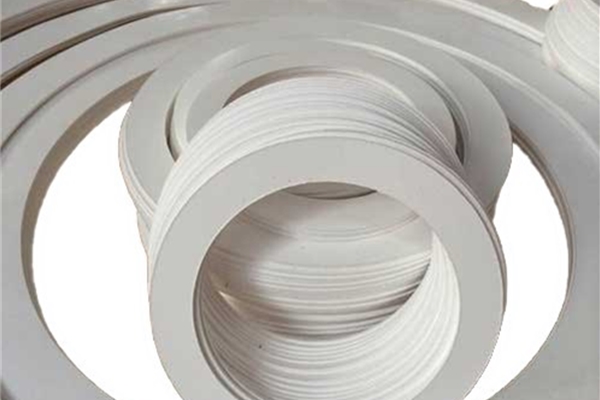
However, when sourcing these sealing materials, procurement managers often ask: Why do PTFE gasket processing costs vary so much? The truth is that the manufacturing cost of a PTFE gasket is never a fixed number. Whether you are ordering standard flat gaskets or specialized expanded PTFE tape gaskets, the final price is dynamically determined by five core variables: Specifications + Material Grade + Machining Process + Order Volume + Precision Requirements.
Here is a deep dive into how these factors impact your bottom line, helping you estimate costs and optimize your procurement strategy.
1. Specifications & Dimensions: The Core Of The Cost
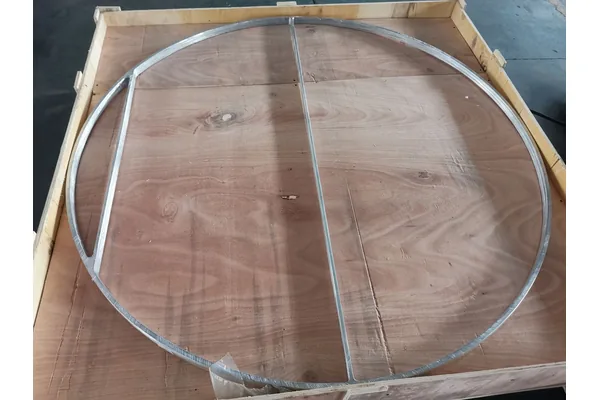
The physical size and structural complexity of the gasket directly impact both machining difficulty and material waste. Small Standard Sizes (e.g., φ20mm): Lowest cost. These are highly standardized with minimal machining fees per piece; Medium Standard Sizes (e.g., φ100mm): Moderate cost. Processing fees remain highly economical; Large or Irregular/Custom Shapes (e.g., φ500mm): High cost. Processing fees can jump by 2x to 5x compared to standard shapes.
Why does the cost increase for custom shapes? It comes down to increased material usage, higher cutting scrap rates, the potential need for custom molds, and longer operating hours for machines.
An example: An electronics manufacturer ordered 1,000 custom square PTFE gaskets (100mm). The machining cost was approximately 20% higher than that of a standard round gasket of the same size. Why? Square shapes result in lower material utilization rates and require more complex CNC tool paths. The rule of thumb: The more standard and symmetrical the design, the more budget-friendly it is.
2. Material Purity: Standard vs. Premium Grades
Not all PTFE is created equal. The grade of the raw material creates a clear price hierarchy:
Industrial Grade (98% Purity): The most cost-effective option, ideal for standard industrial sealing applications.
Food Grade (99.9% Purity): Requires FDA compliance for food and beverage machinery and carries a premium over industrial grades.
High Purity / Aerospace Grade (99.99% Purity): The most expensive tier, engineered for flawless performance in critical aerospace or military applications.
Higher-grade PTFE means: Increased raw material cost, Higher scrap value during machining
Stricter quality inspection standards. Typically, upgrading the PTFE grade increases machining costs by 5%–30%. For applications involving food processing, pharmaceuticals, or high-purity chemicals, investing in higher-grade or expanded PTFE gasket materials ensures compliance and long-term reliability.
3. Manufacturing Process
How the Gasket Is Made Matters; different applications require different processing methods.
1, Die Cutting (Stamping)
Ideal for standard sizes
Best for high-volume production
Most cost-effective per piece
Pros: Fast and economical
Cons: Not suitable for highly complex shapes
2, CNC Turning / Machining
Higher dimensional accuracy
Suitable for custom or small-batch production
Pros: Excellent precision
Cons: Higher unit cost
3, Compression Molding
Suitable for large or thick PTFE gaskets
Required for certain complex structures
Requires tooling investment
If the order quantity is small, mold costs cannot be easily amortized, which increases the unit price.
4. Order Quantities: Volume Is The Key Lever
In gasket manufacturing, volume is the most powerful lever for cost reduction. Facilities typically utilize tiered pricing structures:
Small Batches (≤ 100 pieces): Highest unit price due to machine setup and calibration times.
Medium Batches (1,000+ pieces): Standardized, competitive pricing.
Mass Production (5,000+ pieces): The most optimized unit cost.
Pricing Reality Check: Increasing an order from 1,000 pieces to 5,000 pieces can drop the per-unit machining cost by up to 30%. Maximizing your batch size is the single most effective way to drive down your unit price.

5. Precision Requirements: The Price of Tight Tolerances
High precision requires advanced equipment, slower machining speeds, and carries a higher risk of component rejection (scrap).
Standard Tolerance (±0.5mm): Serves as the baseline price.
High Precision (±0.1mm): Costs typically increase by 10% to 30%.
Ultra-High Precision (±0.05mm): Costs can increase by 20% to 50%.
Case Study: A medical device manufacturer required specialized PTFE seals with a strict ±0.05mm tolerance. Due to the high-end CNC calibration and rigorous QA required, the machining fees were 30% higher than standard industrial PTFE gaskets.
Important: Avoid over-specifying tolerances unless necessary. Many sealing applications perform perfectly well within standard industrial tolerances.
How to Estimate PTFE Gasket Cost Quickly? You can use this simplified formula:
Total Cost ≈ Material Cost + (Base Machining Cost × Complexity Factor × Precision Factor) − Volume Discount. This practical approach helps purchasers evaluate supplier quotations more confidently.
Smart Sourcing Tips for PTFE & Expanded PTFE Gaskets
To optimize your procurement budget: Define actual working conditions (pressure, temperature, media), avoid unnecessary ultra-tight tolerances, choose standard sizes whenever possible, and consolidate orders to increase volume leverage.
Summary
PTFE gaskets and expanded PTFE gaskets are important materials in industrial sealing systems. Understanding what drives machining cost allows you to:
Control procurement budgets; Improve supplier negotiations; Avoid unnecessary over-engineering; Ensure performance without overspending. If you’re evaluating a custom PTFE gasket project, feel free to consult with us to receive a detailed cost breakdown based on your specific application.