

In industrial sealing, metal jacketed gaskets (metal-clad gaskets) combine the strength of a metallic jacket with the conformability of a soft filler, making them a trusted choice for pressure vessels, heat exchangers, and pipe flanges. But because they involve multiple materials + forming processes, prices can vary widely from one quote to another.
To help you estimate costs more accurately—and avoid common purchasing traps—this guide breaks down metal jacketed gasket pricing from four angles: material selection, size & geometry, pressure rating, and manufacturing complexity.
1. Material Selection: The Key to Your Cost
The metal shell is the primary cost driver. Choosing the right alloy is a balancing act between operating conditions (temperature/corrosion) and your bottom line.
Carbon Steel (CS): The budget-friendly entry point. Ideal for non-corrosive media where economy is key.
Stainless Steel (SS304/SS316L): The industry standard. Expect a 20% – 30% price premium over carbon steel for significantly better oxidation and corrosion resistance.
Special Alloys (Hastelloy C276, Monel, Inconel): Reserved for extreme chemical environments. These materials can increase the price exponentially.
Pro Tip: Avoid “over-engineering.” Selecting a high-spec alloy for a low-spec environment creates “ghost costs.” Always match the material precisely to your Technical Data Sheet (TDS).
2. Dimensions & Complexity: Beyond the Diameter
As the diameter grows or the shape becomes more intricate (especially for Heat Exchanger Gaskets with ribs/pass bars), the labor and material waste increase:
Small Scale (D < 100mm): High automation, low unit cost.
Medium Scale (D 100-500mm): Requisition cutting and forming; expect a moderate price step-up.
Large Scale (D > 500mm): High material waste and manual assembly requirements. For gaskets over 1000mm, prices don’t just increase—they often scale linearly with the diameter.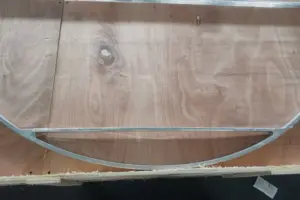
3. Pressure Rating & Precision Engineering
The Pressure Class (PN/ANSI) dictates the gasket’s structural integrity.
Standard Pressure (≤ 1.6MPa): Routine manufacturing with standard lead times.
High Pressure (1.6 – 10MPa): Requires reinforced sealing structures, adding 20% – 50% to the base cost.
Ultra-High Pressure (> 10MPa): These gaskets often require specialized welding and extreme surface flatness (tolerance < 0.1mm). The precision labor here is the primary cost factor.
4. Manufacturing Process: Efficiency vs. Precision
How your metal jacketed gasket is made affects both the lead time and the invoice:
Stamping: Best for high-volume, standard sizes. Lowest cost per unit.
Laser/Waterjet Cutting: Best for bespoke or “odd-shaped” gaskets. Higher precision, but adds a 10% – 15% processing fee.
Multi-Layer Composites: Adding extra jacket layers for specialized sealing increases labor by 20% – 30%.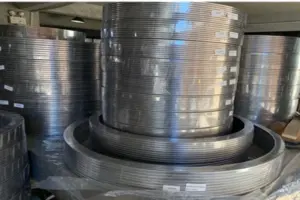
Market Variables: The “Hidden” Costs of Procurement
Beyond the physical jacketed gasket, your commercial terms play a huge role in the final “landed cost.”
| Factor | Typical impact | Why it matters |
|---|---|---|
| Order quantity | -5% to -15% | Batch production spreads setup + tooling cost |
| Surface treatment | + USD 0.7–1.5 / m² | e.g., galvanizing, anti-corrosion coating |
| Rush delivery | +5% to +10% | Overtime + priority scheduling (e.g., <7 days) |
Purchasing Tips: How to Lower Your Sealing Costs
To ensure you are getting the best value for your jackted gaskets, follow these four industry rules:
Standardize Your Specs: Provide clear technical drawings and pressure ratings during the RFQ (Request for Quote) phase. Vague specs lead to “conservative” (higher) pricing from suppliers.
Order Consolidation: If you have multiple projects, “bundle” your gasket requirements. Moving from a “small batch” to a “medium batch” is the easiest way to trigger a 10% price drop.
Focus on Total Cost of Ownership: A “cheap” gasket that fails after six months is infinitely more expensive than a premium gasket that lasts two years. Factor in the cost of downtime and labor for replacement.
Verify Material Certificates: Beware of “too good to be true” prices. Ensure your supplier provides MTRs (Material Test Reports) to avoid low-grade substitutes like “Stainless Iron” being sold as SS304.
Summary
Metal/Double jacketed gasket pricing is not a single fixed number. It’s driven by: jacket material + size/geometry + pressure class + manufacturing route + business terms. With correct material selection, realistic tolerance control, and science purchasing planning, many users can achieve 10%+ cost optimization—without sacrificing sealing safety and reliability.

Leave A Comment