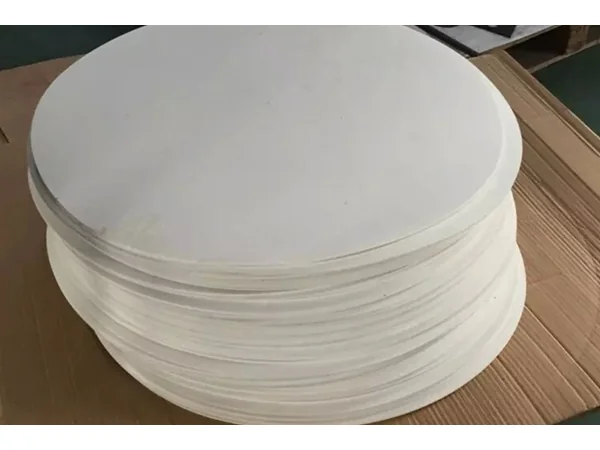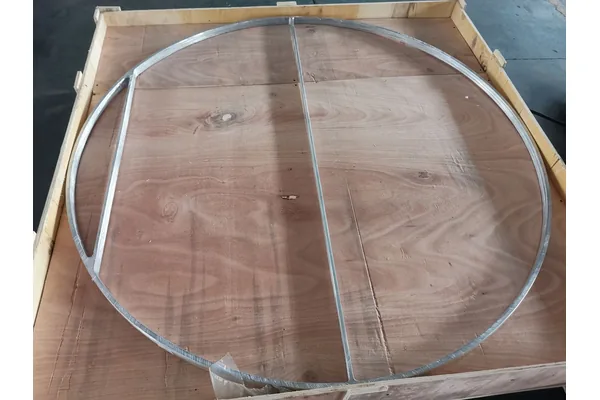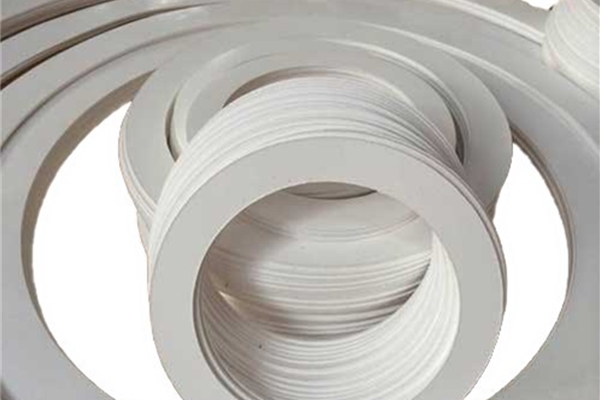

Rubber parts (often called rubber components or rubber molded parts) are used everywhere—seals, grommets, diaphragms, sleeves, bumpers, rollers, and countless custom shapes. What makes rubber unique is that it starts as a linear polymer and becomes a durable 3D cross-linked network after vulcanization.
To consistently achieve the right dimensions, hardness, strength, and compression set, most rubber parts production follows these 7 core stages:
1, Compounding & Preparation: Where Quality Begins
The foundation of any superior rubber seal lies in its recipe. We don’t just “mix” rubber; we engineer it. Base Polymer Selection: Depending on your application, we select the ideal base, such as NBR (Oil resistance), EPDM (Weathering), or FKM (High temperature/Chemicals). Additive Pre-treatment: To ensure a flawless finish, all additives (stearic acid, paraffin, etc.) are pulverized and screened to remove impurities. Liquid softeners are dehydrated and filtered for maximum purity. Reinforcement (Skeleton Materials): For rubber parts requiring high mechanical strength, we integrate fiber materials or metal skeletons (steel/copper wire) to prevent deformation under pressure. Pre-heating: Raw rubber is softened at 60-70°C before being cut into manageable blocks for the next stage.
2) Mastication (Plasticizing)
Goal: reduce raw rubber’s elasticity and increase plasticity so fillers and chemicals can distribute evenly. Common approaches: Mechanical mastication: using a two-roll mill for shear and friction. Thermo-oxidative mastication: controlled heat/oxygen exposure to help chain breakdown (process-dependent)
3) Mixing (Internal Mixer / Two-Roll Mill)
This is the most critical stage for performance stability. We combine the masticated rubber with curing agents, accelerators, and reinforcing fillers.
Why it matters: Uneven mixing leads to “hard spots,” air bubbles, or fluctuating physical properties. At our workshop, our strict mixing protocols ensure a consistent “compound” that guarantees batch-to-batch reliability.
4. Shaping & Molding: Defining the Geometry
Depending on the complexity of your rubber parts, we utilize three primary shaping methods: Compression Molding (Most Popular): Ideal for O-rings, seals, and complex custom shapes. We place the rubber compound into high-precision molds where heat and pressure define the final form. Calendaring: Best for producing rubber sheets or coating fabrics with rubber layers. Extrusion: Used for continuous profiles like sealing strips and hoses. We pre-heat the rubber compound to ensure a smooth surface and tight dimensional tolerances.
5. Vulcanization: The Heart of Rubber Chemistry
Vulcanization is the “magic” moment where the rubber transforms from a plastic paste into a resilient elastic solid. The Science: Under specific temperature and pressure, curing agents create “sulfur bridges” between molecular chains, forming a 3D network. Precision Control: We strictly follow the Vulcanization Curve to avoid “Under-curing” (poor strength) or “Over-curing” (brittleness and aging). This ensures your rubber parts maintain their “bounce-back” even under heavy loads.
6. Functional Engineering: Optimized for Your Environment
We don’t believe in one-size-fits-all. We optimize our formulas based on your specific needs:
Durability: High-structure carbon blacks for maximum wear resistance.
Longevity: Anti-aging agents to combat oxygen and ozone.
Extreme Conditions: FKM for acid/alkali resistance, or specialized plasticizers for extreme cold flexibility.
Smart Features: Flame retardants, anti-static additives, or magnetic powders for specialized industrial roles.
7. Finishing & Quality Control (QC)
A product is only finished when it is perfect. Deflashing: We remove excess “flash” or burrs using modern Cryogenic Trimming (using liquid nitrogen to embrittle and polish) or precise hand-finishing. Strict Testing: Every batch undergoes hardness testing, tensile strength trials, and dimensional tolerance checks. Only then is it cleaned, dried, and packed for delivery.
Summary for Buyers & Engineers:
If you’re sourcing rubber parts for sealing and mechanical applications, the most important production control points are: mold accuracy; mixing uniformity; compound flow and mold filling; curing curve discipline; dimensional tolerance + compression set control (especially for long-term sealing)
If you want, tell us your rubber part type (e.g., gasket, grommet, diaphragm), service media/temperature, and target hardness—then we provide the technical precision your industry demands.